


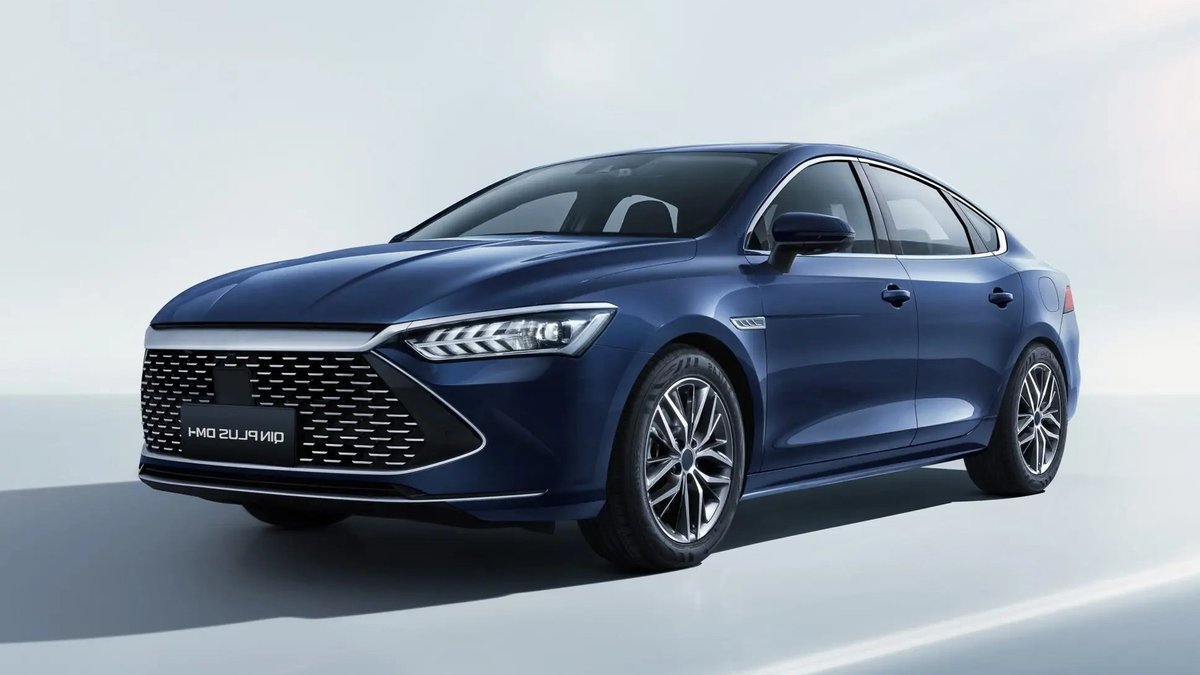
BYD Cars Philippines appears ready to expand its electrified lineup with the upcoming introduction of the BYD Qin Plus DM-i, a plug-in hybrid sedan that could soon join the plug-in hybrid market in the country. The move follows the Department of Energy (DOE) adding the model to its list of recognized PHEVs, signaling a potential launch for the four-door vehicle later this year. The brand already offers the BYD Seal 5 DM-i, but the Qin Plus DM-i is expected to occupy a slightly different position in the market hierarchy.
A Different Take on the DM-i Platform
The Qin Plus DM-i is essentially the more luxurious twin of the Seal 5 DM-i. While the Seal 5 DM-i is marketed as the affordable option, the Qin Plus DM-i aims to offer more equipment and features alongside a more dynamic design. According to the DOE’s listing, the Philippine-spec version will be available in two variants: Luxury and Supreme. Both variants are powered by a 1.5-liter engine that functions primarily as a generator to recharge an onboard lithium-iron phosphate (LFP) battery pack and assist a front electric motor.
Specs listed by the DOE show the battery capacity at 13.6 kWh, though the official specifications note an 8.3 kWh capacity. BYD claims that on battery power alone, the sedan can travel up to 55 km, based on the NEDC cycle. The electric motor produces a maximum output of 100 kW (136 PS), while the internal combustion engine generates 81 kW (110 PS). Dimensions for the vehicle measure 4780mm in length, 1837mm in width, and 1515mm in height.
Related: Understanding Fair Trade Engagement Rings: What You Need to Know
Features and Amenities
Visually, the Qin Plus DM-i blends design elements from the Sealion 5 and the Seal 5. The front fascia features sleek LED headlights and a large grille, while the rear adopts the familiar taillight and trunk designs found in the Seal 5. The cabin includes full leather upholstery, a 10.1-inch rotating touchscreen infotainment system with wireless connectivity, a power-adjustable driver’s seat, and a power sunroof. Other amenities include front and rear center armrests, a wireless charging pad, front and rear USB charging ports, a tire pressure monitoring system, dual-zone climate control with rear vents, a PM2.5 filter, and a full suite of advanced driver assist systems.
Bringing this model to the Philippines will test the limits of the local electric vehicle infrastructure. While the Qin Plus DM-i is built for efficiency and range, the practical reality for many Filipino drivers involves relying on public charging stations rather than home setups. This reliance means the vehicle’s success hinges not just on its specifications and features, but on the availability and reliability of charging networks across the major urban centers. If the grid cannot support the influx of PHEVs smoothly, the benefits of the DM-i technology could be limited by the user experience rather than the car’s engineering.


