


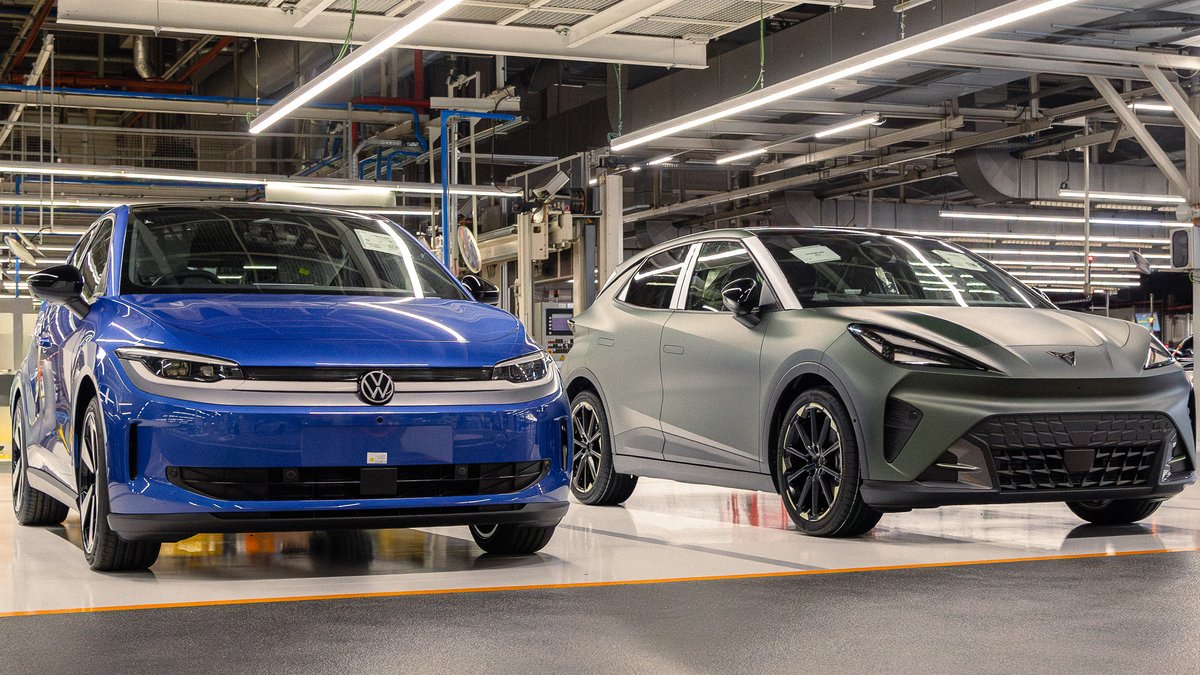
Volkswagen may discontinue the 76‑year‑old Spanish marque Seat by 2029, according to a confidential document cited by the outlet.
Report suggests Seat could disappear
The outlet reported that it obtained a plan outlining a three‑year phase‑out of the Spanish marque, with resources redirected toward Cupra, the performance‑focused offshoot. The filing lists 2029 as the endpoint for the brand’s market presence, and it indicates that the transition would be staged to minimise disruption to dealers and suppliers.
The document also notes that internal reviews are ongoing, and that senior managers will meet later this year to confirm whether the outlined timetable will be kept or adjusted in response to market feedback.
The Spanish marque, launched in 1950 and absorbed into the Volkswagen Group during the 1980s, has long been a staple of the automaker’s European lineup. If the plan proceeds, the brand would cease new model introductions after the current cycle ends, leaving only existing models on sale for a limited period.
Volkswagen’s official response
In a press release, the group stressed that Seat remains a core part of its subsidiary Seat S.A. and will see product updates through 2027, including mild‑hybrid versions of certain models. The statement added that the brand’s longer‑term direction is still under review, and that any change will be communicated well in advance of implementation.
Group executives emphasized that the company will continue to honour warranty obligations and support the existing customer base throughout the transition period.
Read Also: Ford Ranger Wildtrak V6 only option in the Philippines
Stricter emissions rules, costly electrified‑powertrain development, and weakening sales have made the business case harder, the document noted. Scenarios beyond 2030—covering regulation, demand and market conditions—could lead to a gradual phase‑out, though no final decision has been taken.
Group CEO Oliver Blume said the company “remains proud of what the Seat and Cupra team has achieved” and that the group will “strengthen the company further” while staying flexible to adapt brand and product strategies to regulations and customer demand.
Cupra positioned for growth
Cupra began as the performance badge of the Spanish marque before becoming a standalone brand focused on high‑performance, hybrid and electric models. Its current lineup includes the Raval, Born EV, Leon and Formentor, targeting style‑focused buyers across Europe.
The brand’s engineering team has invested heavily in lightweight chassis and advanced battery management systems, aiming to improve efficiency without sacrificing driving trends.
Sales of Cupra have surged, making it one of the fastest‑growing marques on the continent. Volkswagen plans to broaden the model range and push the brand into more international markets, leveraging its ability to produce hybrid, electric and conventional engines.
Cupra aims for global expansion.
Read Also: BYD Qin Plus DM-i PHEV to Launch Philippines
Markus Haupt, CEO of the Spanish marque and its performance offshoot, described the subsidiary as entering “a new chapter from a position of strength,” highlighting an expanding industrial role within the group and growing employment at the Martorell plant.
For workers at the Martorell factory, a shift toward the performance brand could mean more stable jobs if the brand continues to expand, but it also raises uncertainty for those tied to Seat‑specific models that might disappear. Consumers may see fewer budget‑friendly options as the portfolio narrows toward higher‑margin performance and electrified vehicles.
Sales data and future outlook
In 2025, the Spanish marque and its performance sibling together sold 586,300 vehicles, a record for the combined operation. The former’s volume fell 17% that year, while the latter’s rose 33%, reflecting divergent market trends.
The group now aims for the performance brand alone to move between 500,000 and 600,000 units annually. Analysts note that such a target would require the brand to inherit some of the Spanish marque’s product lines, sales networks and production capacity, though the final structure remains undecided.
Volkswagen continues to evaluate the brand portfolio, with the possibility of repurposing the Spanish marque’s facilities for the performance brand or other group initiatives. No definitive timetable has been announced, and the decision will depend on how regulations and consumer preferences evolve in the coming years.


